Berkshire breaks fourteen quarters of caution. Buffett's successor pours billions into stocks

Warren Buffett's successor breaks fourteen quarters of caution and bets billions on stocks and buybacks. The investment giant's profit surged, but key insurer GEICO is losing its edge.
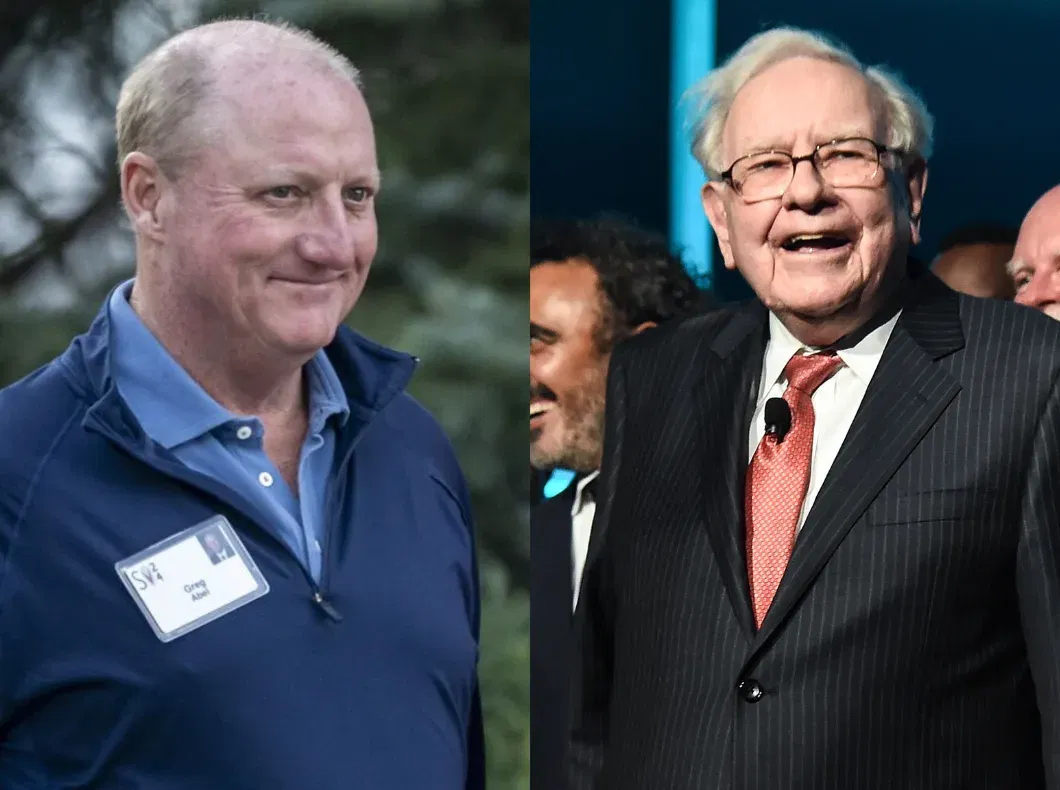
Berkshire Hathaway $BRK-B reported second-quarter 2026 results on Saturday, and the numbers look fabulous at first glance. Net profit attributable to shareholders jumped to $25.7 billion, more than double last year's $12.4 billion. But anyone who looks under the hood will find the conglomerate in a strange split track: operating businesses are growing at a decent pace, while the engine that powered the company for decades – insurance – is now grinding. And above all this hovers another story – Warren Buffett's successor is finally reaching into the record cash pile that the legendary investor spent years accumulating and refusing to spend.
Where the doubled numbers came from
Most of the jump in net profit is down to accounting, not real business. Under rules in effect since 2018, Berkshire must also reflect unrealized gains and losses from its stock portfolio in its earnings, i.e., changes in the market value of stocks it never sold. In the second quarter, the company thus booked over $16 billion in investment gains, compared to just $6.4 billion in the same period last year. Warren Buffett has long argued that these numbers have almost nothing to do with the company's true performance.
Real operating profit, stripping out stock-market swings, rose to approximately $13 billion. That's a 16 percent increase year-on-year. A solid number, but far less dramatic than the doubled headline figure appearing in the headlines.
GEICO loses momentum
While energy, railroads, and manufacturing companies pulled results higher, insurance went the other way. Operating profit from insurance fell 13 percent year-on-year, and the main culprit is GEICO, the group's largest auto insurer. Its underwriting profit dropped from $1.8 billion to less than a billion dollars, a 45 percent decline.
The decline is driven by rising accident frequency and severity. GEICO's loss ratio jumped to 76.6 percent from last year's 71.8 percent, an increase of nearly five percentage points. The company also increased spending on commissions and advertising by more than a quarter, suggesting it is trying to regain the market share it lost to competitors in recent years. Not everything in insurance is bad, however – the reinsurance division BHRG increased profit by more than 40 percent, and smaller primary insurers also improved year-on-year.
Our balance sheet is a strategic asset we deploy at the right moment. It enables us to act decisively, invest when others are hesitant or fearful, and remain steadfast when financial storms strike.
Greg Abel, CEO of Berkshire Hathaway
Fourteen quarters of silence are over
The most interesting news from the results, however, is not any specific number but a change in behavior. Berkshire had been a net seller of stocks for fourteen consecutive quarters. Buffett gradually reduced holdings, most famously in Apple $AAPL, and reportedly saw too few cheap opportunities on the market. In the second quarter, that reversed: CEO Greg Abel bought nearly $20 billion in stocks on a net basis, i.e., more than the company sold.
The largest single bet was a $10 billion investment in shares of Alphabet $GOOG, the parent company of Google, in a private stock placement the tech firm used to fund its artificial intelligence expansion. According to a regulatory filing, Alphabet is now among the five largest positions in the portfolio, alongside Apple, American Express $AXP, Bank of America $BAC, and Coca-Cola $KO. The exact ranking within the five is not disclosed, but Apple still holds the top spot with a share of roughly twenty percent of the portfolio.
It was my idea.
Warren Buffett, asked in a CNBC interview who was behind the Alphabet stock purchase
Abel also accelerated share buybacks, spending $4.5 billion on them, a sharp increase from just $235 million in the first quarter. This marks the biggest pivot in the company's behavior in more than three years.
Buying off-exchange and the weight of lawsuits
Money did not only flow onto the stock exchange. Berkshire earlier this year completed the acquisition of chemical company OxyChem from Occidental Petroleum $OXY for about $9.4 billion, and in July added homebuilder Taylor Morrison at $72.50 per share, totaling roughly $6.8 billion. The two deals combined, over $16 billion, represent a significant shift for a company that for years preferred buying stocks over whole businesses.
As a result of all this spending, Berkshire's famous cash cushion has shrunk noticeably for the first time in years. At the end of June, it stood at $365.5 billion, just under 3 percent below the $373.3 billion at the end of last year. It is still an astronomical sum, but the direction has flipped.
Despite this buying spree, Abel has clear boundaries. Asked if Berkshire would venture into cryptocurrencies, he replied succinctly:
I don't think you'll see cryptocurrencies... I just don't see it that way.
Greg Abel, in an interview with CNBC
Moreover, the company is slowly shedding one risk from the past. Subsidiary utility PacifiCorp faces lawsuits over the 2020 Oregon wildfires, which a jury found were caused by gross negligence. In April 2026, however, an Oregon appeals court overturned the initial verdict due to erroneous jury instructions, which is good news for Berkshire. The final word will come from the state supreme court, set to hear the case in November.
The market, for now, is reacting coolly to all these changes. Berkshire shares have gained only about 3 percent this year, while the S&P 500 index has risen 13 percent, though over the past three months Berkshire has improved by 9 percent. Investors are clearly still getting used to an era where the company is run not by the man who spent sixty years building it, but by his successor who has decided to finally do something with the mountain of cash.