


Lycia stock +75% in three weeks: drug of the future, or a naive premium for one sample of data?

One injection cut the allergic antibody in six healthy volunteers by 96%. The company that developed it raised $365 million on the stock market and after three weeks is worth $1.6 billion. Its big pharmaceutical partner walked away in February.
Key points
Six healthy volunteers and one injection are all the public human data behind $1.6 billion
Eli Lilly terminated a contract worth up to $1.6 billion in February and paid not a single milestone
Four months after leaving the collaboration, Lilly reappeared among investors in a $75 million round
Employees bought options at an average of $2.15, the market pays over $31 today
Two dates on the calendar, November 16 and April 20, can move the price more than any science
Partner left without paying, the market came in with a billion
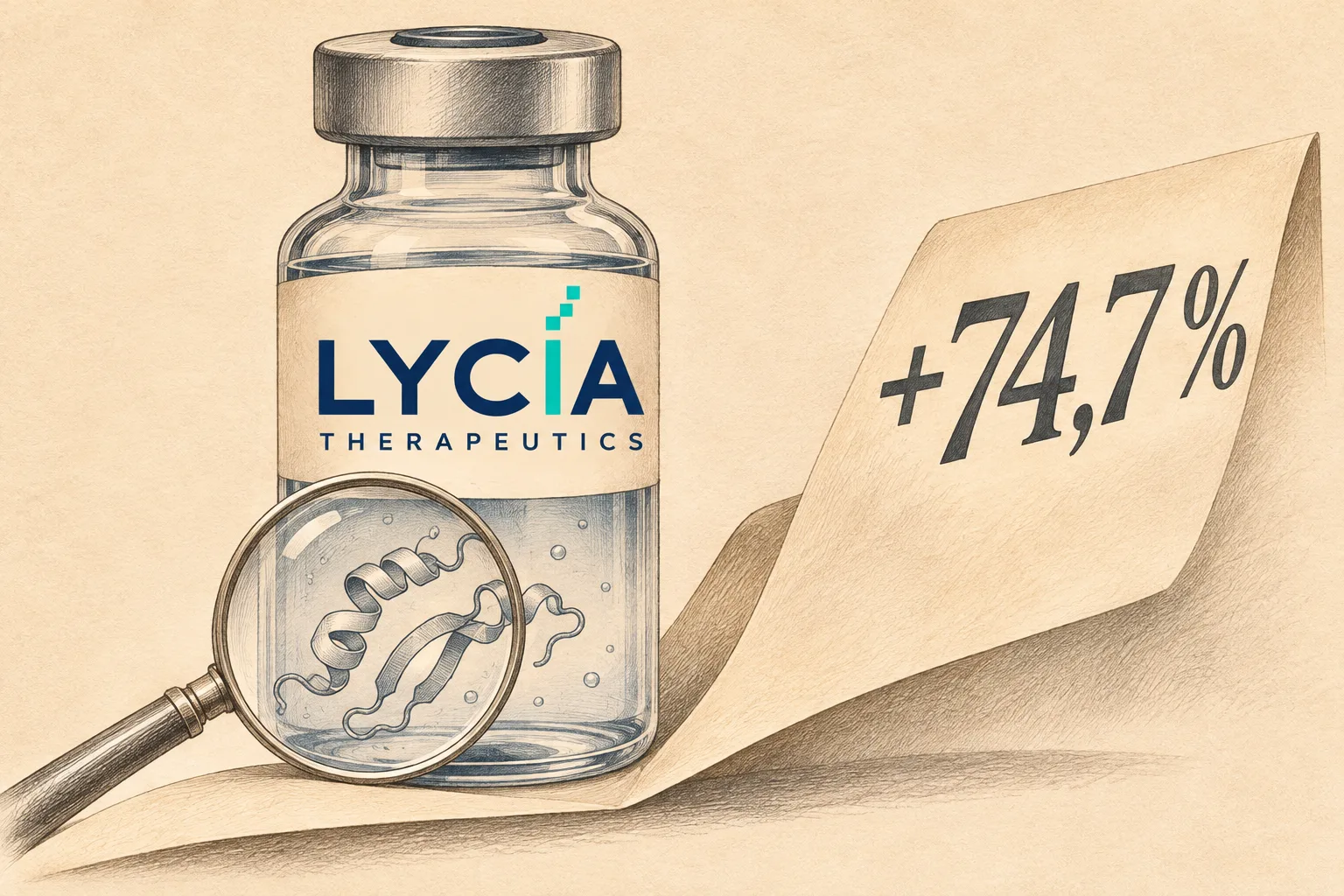
Lycia Therapeutics shares $LYCA have traded on Nasdaq since 23 October 2026 and closed the first day at $30.00, two-thirds above the $18.00 issue price. Three weeks later, on 11 November 2026, the stock stood at $31.44. Anyone who bought at the issue now has 74.7% more in their account.
Lycia is built on an idea by Stanford Nobel laureate Carolyn Bertozzi. Most drugs merely block a harmful protein in the body, like putting handcuffs on a troublemaker. Lycia's molecules instead take it to a cellular "shredder", where it disappears completely. The first target is the antibody that triggers peanut or milk allergy.
It sounds like a drug of the future and the market has priced it that way. But the only public human data comes from a handful of healthy volunteers who received a single injection. No patients, no allergen, no repeated dosing.
And there is one more thing the IPO enthusiasm buried. Eli Lilly, one of the world's largest drugmakers, had a deal with Lycia that could have brought up to $1.6 billion. In February this year it terminated the agreement and paid not a single milestone. Eight months later the stock market values the same company at roughly the same amount.
The following sections show exactly what that premium is buying, why the big partner walked away, and where the price can break before more data arrive.