


Warren Buffett's brilliantly simple strategy earns Berkshire billions in Japan

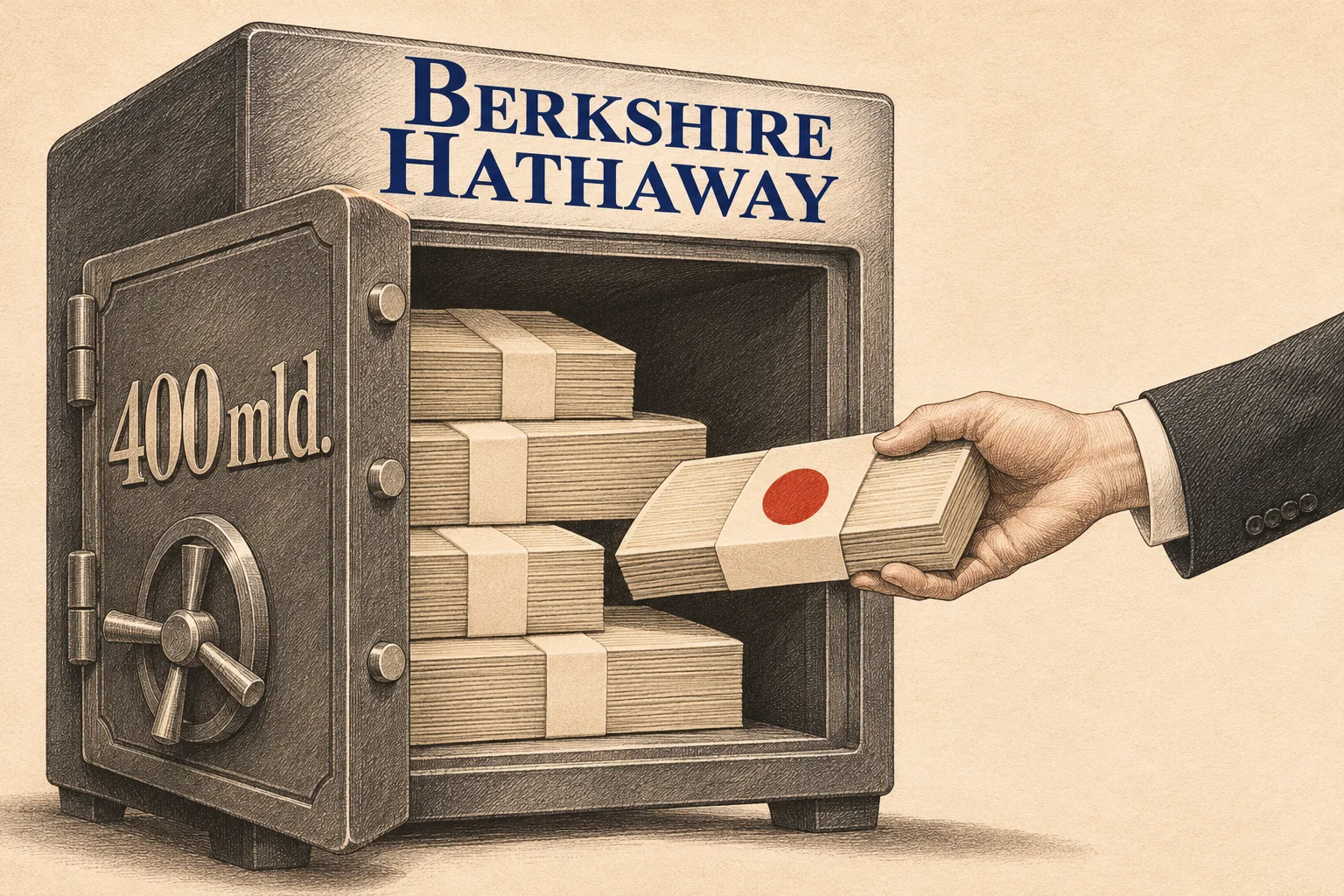
Berkshire is sitting on $377 billion in cash. Even so, this week it's borrowing billions more in Tokyo, and has to offer lenders more than it did in the spring. Its shares are trading just below an all-time high.
Key points
Berkshire has $377 billion in cash, yet this week it's borrowing billions more in Tokyo
For new five-year debt, it has to offer lenders more than it did in the spring, when it paid an average interest rate of 2.4 %
In his letter to shareholders, Warren Buffett laid out the math: $812 million versus $135 million
Third-quarter operating earnings fell 5.8 %, and underwriting earnings plunged 43 %
The world's biggest cash hoard goes borrowing
Berkshire Hathaway $BRK-B has $377 billion in cash and U.S. Treasury bills. That's enough to buy most of the companies in the S&P 500 index outright.
And yet on November 9, the company hired Mizuho and Bank of America and is heading to Tokyo to borrow. It's Berkshire's first yen bond issue since April and its second since Warren Buffett handed over the reins to Greg Abel. This time it'll pay more: investors are demanding a higher premium on five-year bonds than they did in the spring.
At first glance, it makes no sense. Why would someone borrow when they have so much money they don't know what to do with it? The answer is the same as when someone with savings at home takes out a mortgage in a country where they're buying an apartment to rent out. They don't need the money. They need debt in the same currency as their rental income, and they want the rent to exceed the payment.
That's exactly what Berkshire has been doing in Japan for seven years, making money in a way most shareholders have no idea about. But this part of the business is starting to show cracks this year: Japanese interest rates have surged to a 30-year high, and the cheap money underpinning the whole structure is getting more expensive.
Akcie Berkshire přitom stojí těsně pod rekordem a za poslední rok vydělaly skoro dvakrát tolik co index S&P 500. Další část ukáže, kolik přesně tahle "japonská hypotéka" vynáší, proč je to dnes nejlépe fungující stroj na peníze v celé firmě a kde se mu začíná lámat matematika.